

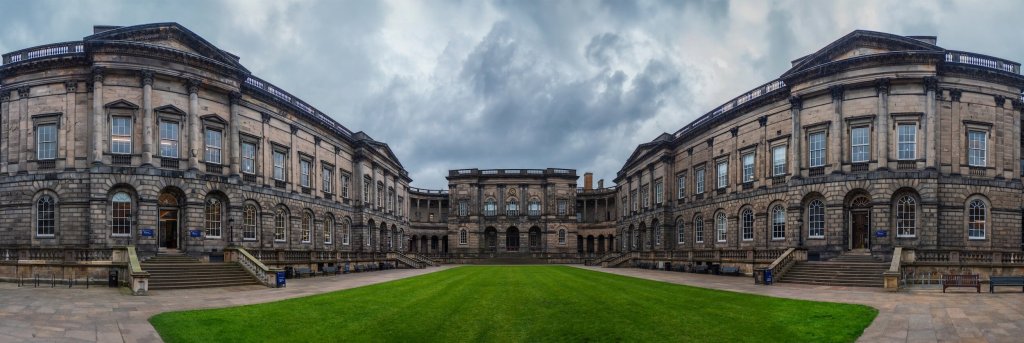
A reminder that the closing date for submissions for next year’s Samuel Beckett Society Conference which will take place at the University of Edinburgh on 5-7 June 2025 is fast approaching. Abstracts should reach the organisers by Monday 11 November 2024. The conference title is Beckett’s Relationships which should provide a wide scope for all those working in the field. The call for papers has been open for a couple of months and we would like to remind all members that they should bear in mind that the closing date for applications is just over two months away. Submissions should be made directly to the organising committee here consisting of a 200-word abstract, a 100-word bio, and should also include any access requirements if needed. Full details are available here at the conference website.
As the cfp explains: Beckett’s work depicts a long list of tangled and variously charged relationships, from the dysfunctional families of Eleutheria and Footfalls and the troubled romantic liaisons of Human Wishes, Murphy, More Pricks than Kicks, First Love and Happy Days, to the pseudo-couples and pseudo-triples of Waiting for Godot, Endgame, Mercier and Camier and Come and Go, and the mysterious and often unsettling abstractions of How It Is, Eh Joe, Quad and The Lost Ones. The generative biographical and historical work on Beckett’s own life also offers opportunities for thinking further about some of the key – and under-appreciated – relationships with other people and institutions that shaped Beckett’s work.
Beyond this textual focus, the vigour of contemporary Beckett Studies means that we sit in generative relationship to a range of other fields of scholarship, theories and methodologies which merit further discussion. And looking beyond the walls of academia, we also have the opportunity to think more deeply about previous, ongoing – and future? – examples of the way that other literary, artistic, and cultural creators have developed their own relationship with Beckett’s work to produce new art.
More broadly, at a moment when our own interpersonal, intercultural and institutional relationships are often so fraught, and the challenges of relating to each other and the world around us have undergone such momentous changes, we might ask: what sort of relationships do Beckett’s texts encourage? How might Beckett’s work help us relate to today’s world?
We are keen to hear from a range of graduate, early-career and established scholars, and about early- and late-stage research projects and ideas. A tiered-pricing ticket system will be offered on registration, with free attendance options available to postgraduate and unwaged. Applications will also be opened for Ruby Cohn travel bursaries later in the year. All participants must be members in good standing of the Samuel Beckett Society.
Topics
Topics might include, but are not limited to:
– Relationships depicted in Beckett’s texts: familial, romantic, erotic, political? Across gender, race, class, geography? Compassionate, charitable, violent, co-dependent?
– Key relationships and/or under-appreciated people, influences and institutions in Becket’s life, and their impact on his work.
– Relationships between Beckett’s texts, between Beckett’s media, or between Beckett’s genres.
– The relationship between Beckett’s manuscripts, published texts, and translations.
– The relationship between Beckett’s work and that of other literary, artistic, or cultural creators.
– The relationship between Beckett’s work and political or historical events.
– Relationships between Beckett’s work and popular culture.
– Relationships between Beckett Studies and other scholarly fields: gender and queer studies, medical humanities, ecocriticism, blue humanities, object-oriented ontology, phenomenology…
– Relationships between Beckett’s work and new forms of media technology.
– Relationships between those of us involved in Beckett’s work: scholars, fans, instructors, theatre practitioners, adaptors, responding artists, publishers, the Beckett Estate.
– The relationship between Beckett’s work and the education system, the tourism industry, or the theatre industry.
– The kinds of relationships that Beckett’s work encourages.
– Beckett’s relationship to our own contemporary context(s): where do we find the value, the problems, and the challenges in reading, watching, staging, teaching and enjoying Beckett’s work today? How might Beckett help us relate, differently or better, to today’s world?
Formats
You can apply to present either:
– a 15-20-minute academic paper. Please send a 200-word abstract, a 100-word bio, and any access requirements.
– a 5-minute ‘lightning’ talk: our panel of ‘lightning talks’ lets you sketch out your idea, get some feedback, and generate some discussion in a briefer and more informal style. Share early-stage research, talk through something you’re thinking of tackling, reflect on something key in Beckett Studies – or just tell us what you think you desperately need to talk about for five minutes.
Masthead Artwork by Hannah Clarkson


